
Elastin's core role in anti-aging formulas is to provide structural support and improve the skin's apparent elasticity. By forming a highly cross-linked network structure, it works with collagen to maintain the mechanical resilience of the tissue, helping the skin appear visually tighter rather than directly filling wrinkles.
When it comes to elastin, many formulators’ first reaction is that it is insoluble or has too large a molecular weight. Let’s clarify the basic concepts first. Elastin (INCI name: Hydrolyzed Elastin or Soluble Elastin, depending on the extraction and degradation process) is a highly cross-linked hydrophobic protein. In natural tissues, it combines with microfibrils to give the tissue the ability to stretch and rebound like rubber. The raw-grade elastin we provide has undergone specific enzymatic hydrolysis or extraction processes to retain the core elastin peptide structure, ensuring that it plays a film-forming and supporting role in the formula.
When making anti-aging formulas, you cannot separate collagen and elastin. For example, collagen is the steel bar in a building, providing tensile strength; elastin is the rubber pad connecting the steel bars, providing resilience after deformation. If there is only collagen but no elastin in the formula, the skin will look stiff; only by combining the two can it show a real elastic appearance to the touch. In our research and development, we usually recommend compounding recombinant humanized collagen and hydrolyzed elastin in a specific ratio to simulate the natural ratio of the extracellular matrix.
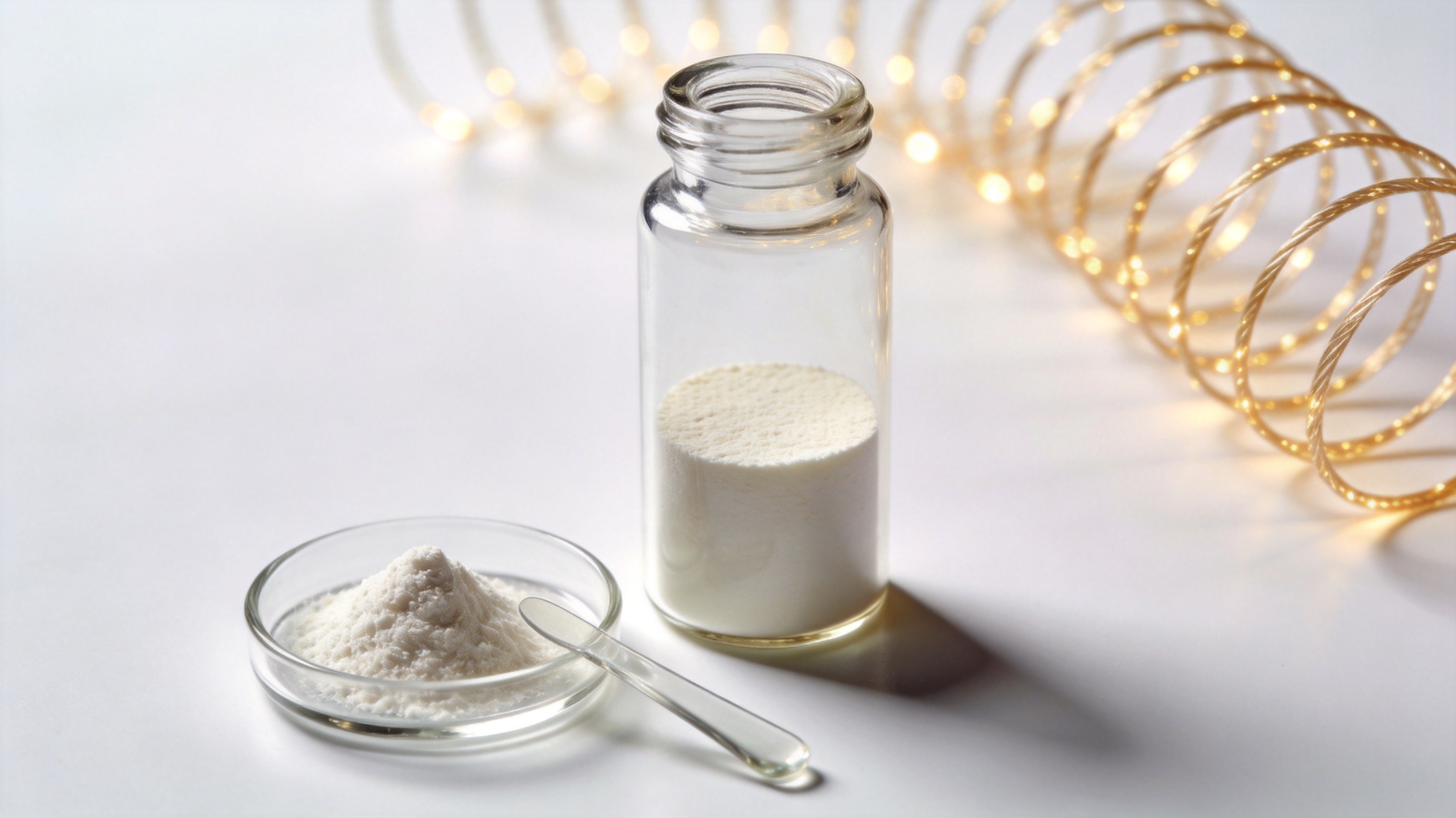
In order to meet the needs of different dosage forms, our elastin raw materials are available in the following specifications: Appearance: white to slightly yellow powder or transparent liquid Solubility: Hydrolyzed elastin is easily soluble in water. Natural extraction of elastin requires specific solvents. Recommended addition amount: 0.1% to 5.0% Applicable pH range: 4.5 to 7.5 Compatibility recommendations: Excellent compatibility with hyaluronic acid, recombinant collagen, and fibronectin. Avoid direct mixing with high-concentration strong acids or strong oxidants.
Q: Can elastin raw materials directly penetrate into the dermis layer of the skin? A: It cannot be penetrated directly. Macromolecule elastin mainly stays on the surface of the stratum corneum to form a breathable and water-retaining film, improving the firmness of the skin's appearance. Hydrolyzed elastin penetrates into the epidermis to provide hydration and support signals, helping skin look plumper.
Q: Will adding elastin to the formula cause muddying? A: There is a risk of mud rubbing at high concentrations. Elastin has excellent film-forming properties. It is recommended to control the addition amount within 2% and use it with a low molecular weight moisturizer such as glycerin or butylene glycol to optimize the skin feel and absorption speed when applied.
Q: Can elastin and collagen be used together in anti-aging formulas? A: It is absolutely possible and recommended to use both at the same time. Collagen provides structural support and elastin provides resilience, which work together to better mimic the natural extracellular matrix, visually improving the skin's overall firmness and elastic appearance.
Q: Will elastin raw materials be deactivated during high-temperature emulsification? A: Yes. Proteins are prone to denaturation at high temperatures. It is recommended to add elastin raw materials when the water phase temperature drops below 45°C, or to use a cold preparation process to retain its spatial structure and biological activity to the greatest extent.